Winter wrap care: salt, snow & cold
Winter is brutal on vehicle wraps. Road salt eats edges, freezing temps make vinyl brittle, and heat shock from warm garage to cold outdoors causes invisible micro-cracking. A wrap that would last 5 years in California can be done in 3 winters in Michigan. Here's how to fight back.

Winter survival checklist
- • Wash more often, not less — every 7 to 10 days in salty regions
- • Use lukewarm water, never hot, never freezing
- • Never garage-park a wet, salt-covered car
- • Dry door edges and jambs thoroughly to prevent ice damage
- • Move slowly during pressure washing — cold makes vinyl less forgiving
- • Avoid drive-through brush washes (always), but especially in winter
Road salt: the number one wrap killer
Road salt and de-icing chemicals (calcium chloride, magnesium chloride) are designed to be aggressive. They're sprayed on roads to melt ice — and they're extremely effective at finding their way into every edge, seam, and door jamb of your car.
On bare paint, salt eventually causes rust. On vinyl wrap, it's worse: salt slowly degrades the adhesive bond between the vinyl and the paint underneath. The damage is invisible at first — but after a full winter, you'll see edges starting to lift, especially on the rocker panels, lower bumpers, and wheel arches.
The fix:Wash more often in winter. The instinct is to wash less because it's cold and miserable — that's exactly wrong. Every additional day salt sits on your wrap is another day of damage. Aim for every 7 to 10 days at minimum during salting season.
Cold temperatures change vinyl behavior
Vinyl wrap is engineered to be flexible at normal temperatures. Below about 40°F (4°C), it gets noticeably stiffer. Below freezing, it can become brittle enough to crack under stress that would be no problem in summer.
This matters for two reasons. First: closing a door hard, hitting a deep pothole, or running into a snowdrift can all transfer enough force to cause micro-cracks in the vinyl, especially at stress points like edges and corners. Second: any post-install adjustments (lifting edges, bubbles, small repairs) become much harder. The adhesive doesn't want to bond, and the film doesn't want to conform.
The fix: Be more careful with your car in winter. Close doors gently. Avoid hard impacts. If you need a repair done, ideally wait until the car (and the shop) can warm up to at least 60°F before any work.
The garage-parking trap
Most wrap owners park in heated garages in winter — which is mostly good. But there's a hidden problem: parking a wet, salt-covered car in a 65°F garage is one of the worst things you can do to a wrap.
Warm temperature accelerates chemical reactions. The salt that was harmlessly sitting on the surface in cold weather suddenly becomes highly reactive when it warms up. Salty water sitting in door jambs and panel gaps overnight, at room temperature, does in 8 hours what would take a week of outdoor exposure.
The fix: If you garage-park, either (a) wash the car before parking, or (b) accept that you need to wash within 24 to 48 hours of pulling in salty. The worst pattern is salty-car-in-garage-for-three-days.
"Heat plus salt plus time equals wrap damage. Remove any one of those and you're fine."
Heat shock and ice damage
Two more winter-specific hazards:
Heat shockhappens when there's a huge temperature difference between the vinyl and the water hitting it. Hot water on a frozen wrap, or hot defrost air on iced-over panels, causes the vinyl to expand or contract too fast. Cracking can be the result.
Ice formationin door jambs, seams, and panel gaps is a physical problem. Water that gets trapped in these spots freezes, expands, and pushes the vinyl edges outward. Over a winter, this can cause permanent edge lifting that's impossible to fix.
The fix: Use lukewarm water for winter washes — body temperature, roughly. Dry the car thoroughly after washing, paying special attention to door jambs, the trunk seal, and around emblems. A leaf blower works great for this.
Winter wash schedule by region
| Climate | Wash frequency |
|---|---|
| Mild winter (rain, no salt) | Every 2 weeks |
| Cold but dry (snow, no salt) | Every 2 weeks |
| Salted roads, moderate use | Every 7 – 10 days |
| Heavy salt + daily highway | Every 5 – 7 days |
| Coastal winter (salt air + road salt) | Every 5 days |
The winter wash routine
Same principles as a regular wash, with a few adjustments:
1. Use a heated bay if you can. Coin-op self-serve car wash with a wand works great, but stay 8+ inches from edges.
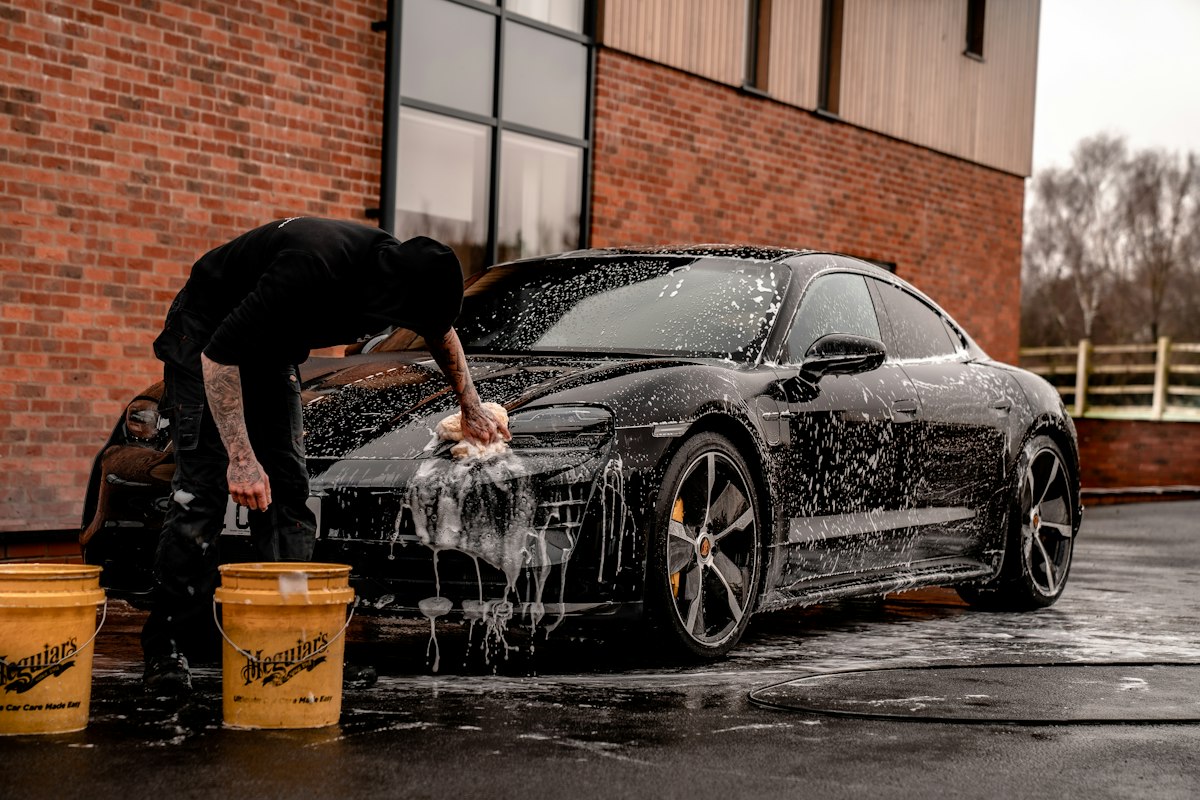
2.Lukewarm water only. Hot water and freezing temperatures don't mix.
3. Focus extra time on lower panels, wheel wells, and door jambs — where salt accumulates.
4. Rinse thoroughly. Soap residue + cold air = streaks that are hard to remove later.
5. Dry completely before parking. Door jambs and seals especially.
6. If outside, never let water freeze on the car. Either dry it or keep it above freezing until evaporation finishes.
Personalize your routine
Get a year-round care schedule built for your climate
Enter your climate, parking, and usage. Our Wrap Care Schedule Generator builds a personalized year of wash dates, decon dates, and seasonal adjustments — calendar import included.
Build my scheduleEmergency response
If you drive through heavy salt slush, rinse the car within 24 hours — even a quick spray-down at home counts. The salt that just sits there for days is doing the real damage, not the salt that gets rinsed off the next morning.
Frequently asked questions
Can I use a snow brush on a wrapped car?
Use a soft-bristle brush or a foam-pad scraper — never anything with hard plastic edges. Most cheap snow brushes will scratch wraps and scuff matte/satin finishes specifically. Spend a few dollars more for a wrap-safe option.
Is touchless car wash safe in winter?
Touchless is significantly safer than brush washes, but the high-pressure jets can still lift edges. If you use them, request lower pressure and avoid the "hot wax" finishing cycle — many use products that aren't wrap-safe.
Should I apply sealant before winter?
Yes — a wrap-safe sealant applied in late fall creates a hydrophobic barrier that helps salt and slush wash off more easily. Reapply at the halfway point of winter for best results.
Bottom line
Winter doesn't have to wreck your wrap — but it will if you ignore it. The owners who lose their wraps to winter are the ones who wash less, leave salt sitting, and park salty cars in warm garages. The owners whose wraps still look fresh in year 5 are the ones who wash more in winter, dry everything thoroughly, and treat road salt like the chemical attack it actually is. Do the boring stuff and the wrap rewards you.